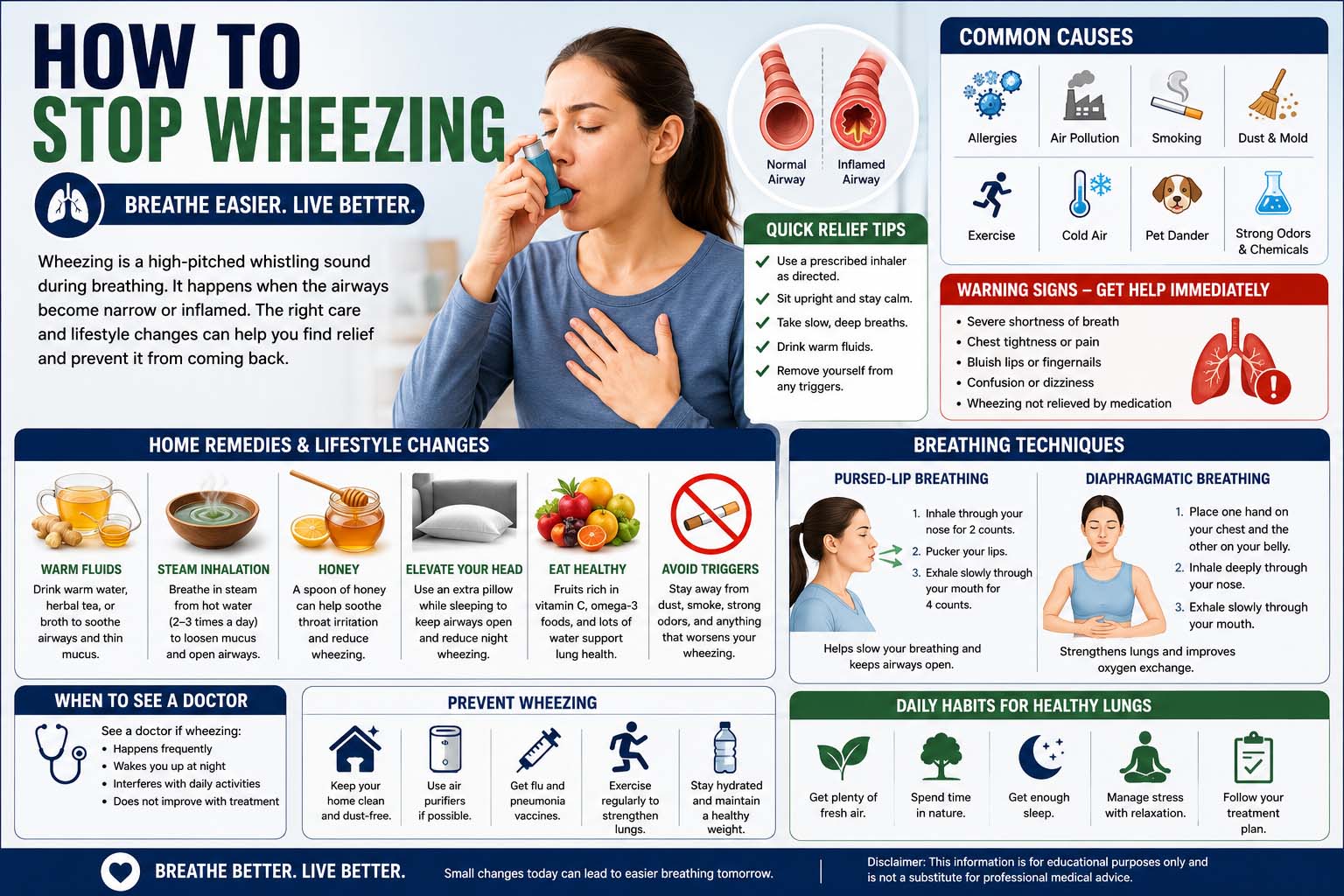
Wheezing is a high-pitched whistling sound that occurs when air flows through narrowed airways in the lungs. Many people experience wheezing during allergies, asthma attacks, respiratory infections, or exposure to smoke and pollution. The sound may become more noticeable while breathing out, although severe cases can also affect inhalation. Learning how to stop wheezing is important because persistent breathing problems can interfere with sleep, exercise, and daily activities.
Wheezing is commonly linked to asthma, but it can also develop from bronchitis, seasonal allergies, colds, or even anxiety. In some cases, environmental irritants such as dust, pet dander, and cigarette smoke can trigger airway inflammation. Therefore, understanding the underlying cause is the first step toward managing symptoms effectively.
People who wheeze occasionally may find relief through lifestyle adjustments and breathing techniques. However, recurring or severe wheezing should never be ignored because it can signal a serious respiratory condition that requires medical attention.
How to Stop Wheezing Immediately
Many people search for ways on how to stop wheezing immediately when breathing becomes uncomfortable or stressful. The first thing to do is remain calm because panic can tighten the chest muscles and worsen breathing difficulties. Additionally, sitting upright instead of lying flat can help open the airways and improve airflow into the lungs.
Slow, controlled breathing is another useful method for immediate relief. Taking gentle breaths through the nose and slowly exhaling through pursed lips may reduce airway pressure and help stabilize breathing patterns. This technique is often recommended for people dealing with mild asthma symptoms or temporary airway irritation.
Warm steam can also help loosen mucus and soothe irritated airways. For example, taking a hot shower or inhaling steam from warm water may temporarily improve breathing comfort. Hydration is equally important because drinking warm fluids can thin mucus and reduce throat irritation.
Avoiding triggers is essential during wheezing episodes. Strong perfumes, cigarette smoke, dust, and cold air may worsen symptoms quickly. Therefore, moving into a cleaner and more ventilated environment can sometimes reduce wheezing within minutes.
Although these methods may help temporarily, severe breathing difficulties, chest pain, or bluish lips require immediate medical care. Sudden wheezing can sometimes indicate a dangerous respiratory emergency that needs professional treatment.
Managing Symptoms at Night
Nighttime wheezing can be especially frustrating because it interrupts sleep and leaves people feeling exhausted the next day. Understanding how to stop wheezing at night often involves identifying environmental and lifestyle triggers that worsen breathing during sleep.
One common reason for nighttime wheezing is poor sleeping posture. Lying flat may allow mucus to build up and place pressure on the airways. In contrast, sleeping with the head elevated using extra pillows can improve airflow and reduce chest tightness during the night.
Bedroom allergens also contribute to nighttime breathing problems. Dust mites, pet hair, mold, and pollen can irritate sensitive airways while sleeping. As a result, keeping bedding clean, vacuuming regularly, and using air purifiers may help create a healthier sleeping environment.
Dry indoor air can also irritate the lungs and throat. Some people find relief by using a humidifier to maintain comfortable moisture levels in the bedroom. Readers can also explore the benefits of humidifier use for additional information. However, humidifiers should be cleaned properly because mold and bacteria growth can worsen respiratory symptoms.
How to Stop Asthma Wheezing Without Inhaler
Asthma-related wheezing can sometimes become difficult when an inhaler is unavailable. Many people search for ways on how to stop asthma wheezing without inhaler support during emergencies or unexpected situations. While medical inhalers remain one of the most effective asthma treatments, some natural methods may help manage mild symptoms temporarily.
Controlled breathing exercises are often recommended for asthma sufferers. Techniques such as diaphragmatic breathing and pursed-lip breathing may help reduce chest tightness and improve oxygen flow. Additionally, these methods encourage slower breathing patterns and can help prevent hyperventilation during mild asthma episodes.
Warm caffeinated drinks like coffee or tea may provide slight temporary relief for some individuals because caffeine has mild bronchodilator properties. Although this is not a replacement for proper asthma medication, it may help relax airway muscles briefly in mild situations.
Staying hydrated is also important because dehydration can thicken mucus and worsen breathing discomfort. Therefore, drinking water throughout the day may help keep airways moist and reduce irritation.
Options When an Inhaler Is Unavailable
People who do not have asthma may still wonder how to stop wheezing without inhaler use. In many mild cases, natural remedies and lifestyle changes can help improve breathing comfort. One of the simplest methods is improving indoor air quality. Clean air helps reduce irritation and allows the lungs to recover more effectively.
Steam inhalation is frequently used to soothe inflamed airways and loosen congestion. Warm herbal teas with honey may also help calm throat irritation and reduce coughing associated with wheezing. People who experience headaches during coughing can also learn why their head hurts when I cough. Ginger tea is particularly popular because ginger contains anti-inflammatory properties that may support respiratory health.
Breathing exercises remain one of the most useful natural approaches. Deep breathing techniques encourage relaxation and can improve airflow during mild wheezing episodes. Similarly, gentle stretching and yoga may help open the chest and improve lung function over time.
Regular exercise can strengthen the respiratory system, although intense workouts should be avoided during active wheezing. Walking, swimming, and low-impact activities may support better lung capacity and overall breathing health.
When Wheezing Requires Medical Attention
Although mild wheezing can sometimes improve with home remedies, there are situations where professional medical care becomes essential. Persistent wheezing, severe shortness of breath, chest pain, or difficulty speaking due to breathing problems should never be ignored.
Children, older adults, and people with chronic respiratory conditions may face higher risks from untreated wheezing. Furthermore, respiratory infections such as pneumonia or severe asthma attacks can quickly become life-threatening without treatment. Healthcare professionals may document severe oxygen-related breathing complications using terms such as acute hypoxic respiratory failure ICD 10.
Maintaining Long-Term Respiratory Health
Learning how to stop wheezing involves more than temporary relief. Long-term respiratory health requires healthy habits, trigger management, and regular medical checkups when necessary. Overall, avoiding smoking, staying active, eating nutritious foods, and maintaining clean indoor air can all support stronger lungs and healthier breathing.